The best rider in every category
Modern Tour de France arithmetic is simple: yellow for the fastest overall, green for the points, polka dots for the mountains, white for the best young rider. But for fifteen editions — 1968 to 1974, then again from 1980 to 1989 — there was a fifth answer to the question “who is the best?”: the combination classification, a ranking for the rider who was best everywhere at once.
The maths was beautifully blunt. Take a rider’s rank in the general classification, add his rank in the points competition, add his rank in the mountains competition. Lowest total wins. First in GC, third in points, second in the mountains? Six points. It rewarded the rider with no weaknesses — the one who could sprint well enough, climb with the best and hold his place overall. You couldn’t luck into it, and you couldn’t specialise into it either: only riders ranked in all three classifications even appeared on the sheet.
From plain white to glorious patchwork
The first winner, in 1968, was Italy’s Franco Bitossi — and from 1969 the leader wore a plain white jersey, the same colour that today marks the best young rider. Then came the man the classification might as well have been invented for: Eddy Merckx won it five times — 1969 through 1972, and again in 1974 — which tells you everything, given that in 1969 he won yellow, green and the mountains outright in a single Tour. Joop Zoetemelk took the 1973 edition in the gap between Merckx’s reigns.
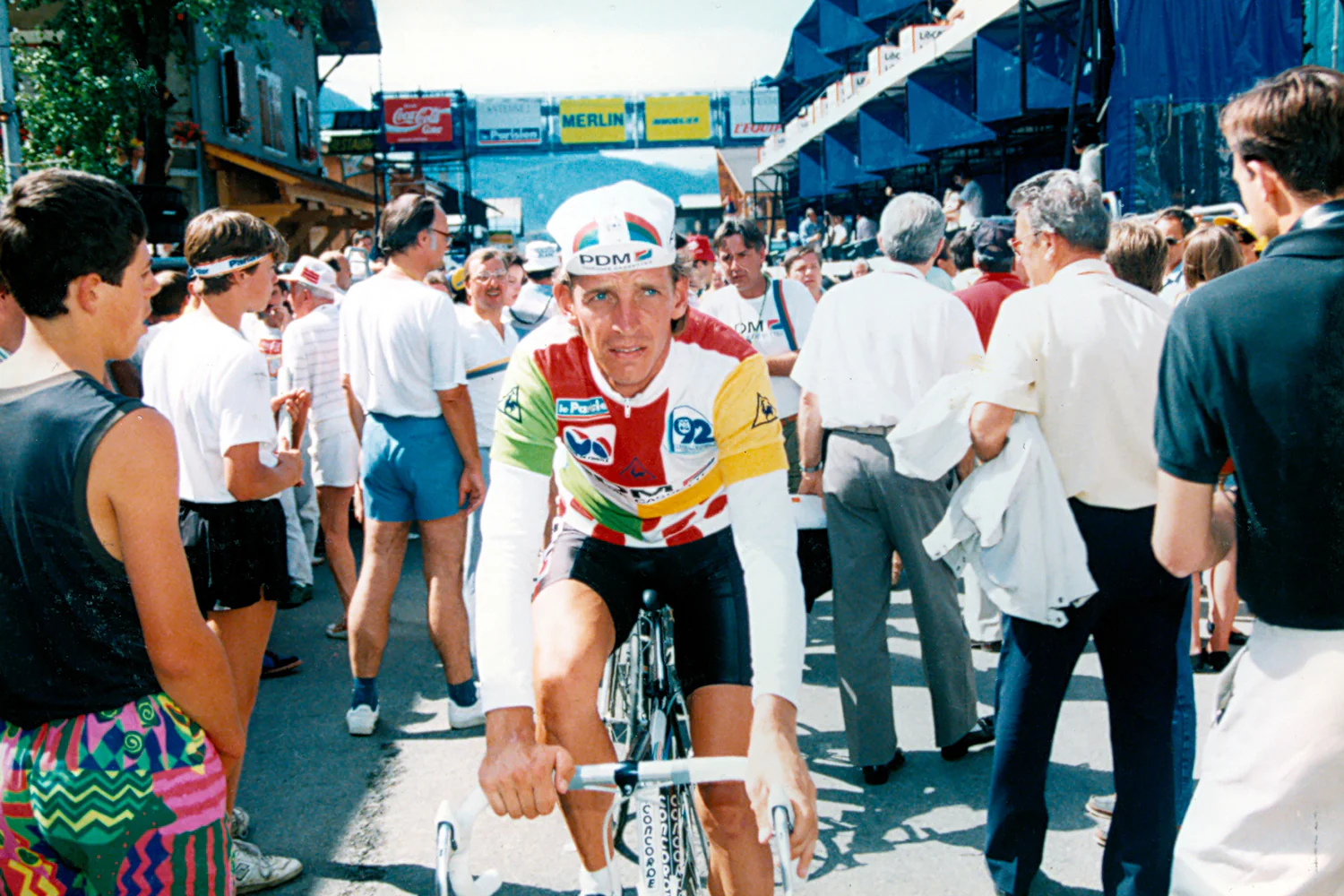
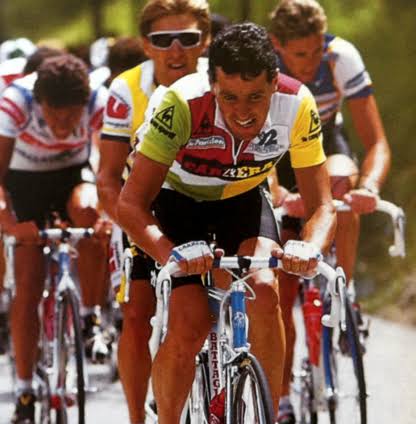
The classification vanished after 1974, came back in 1980, and in 1985 the organisers gave it the look everyone remembers: the patchwork jersey — panels of yellow, green, polka dot and white stitched together like a quilt made from the Tour’s laundry basket. It is, depending on who you ask, either the ugliest jersey in cycling history or the greatest. We know where we stand: they should never have stopped making it.
Hinault, LeMond and the jersey’s golden age
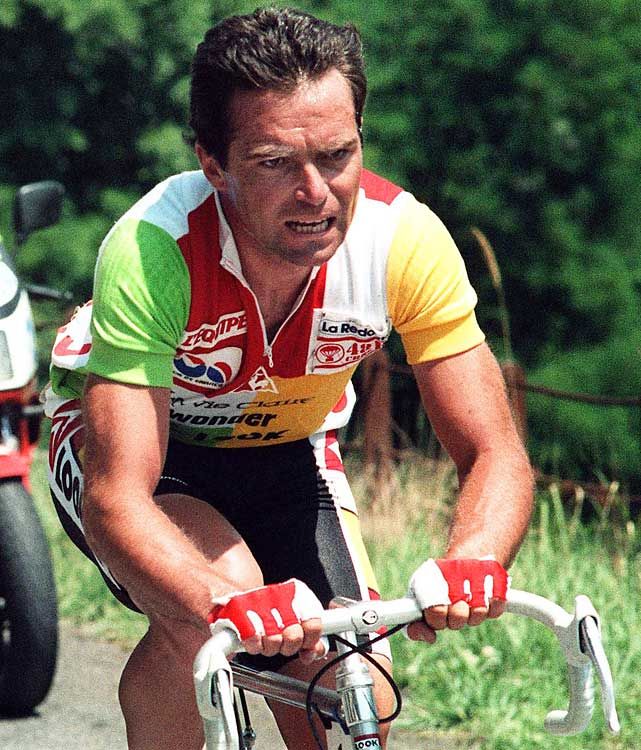
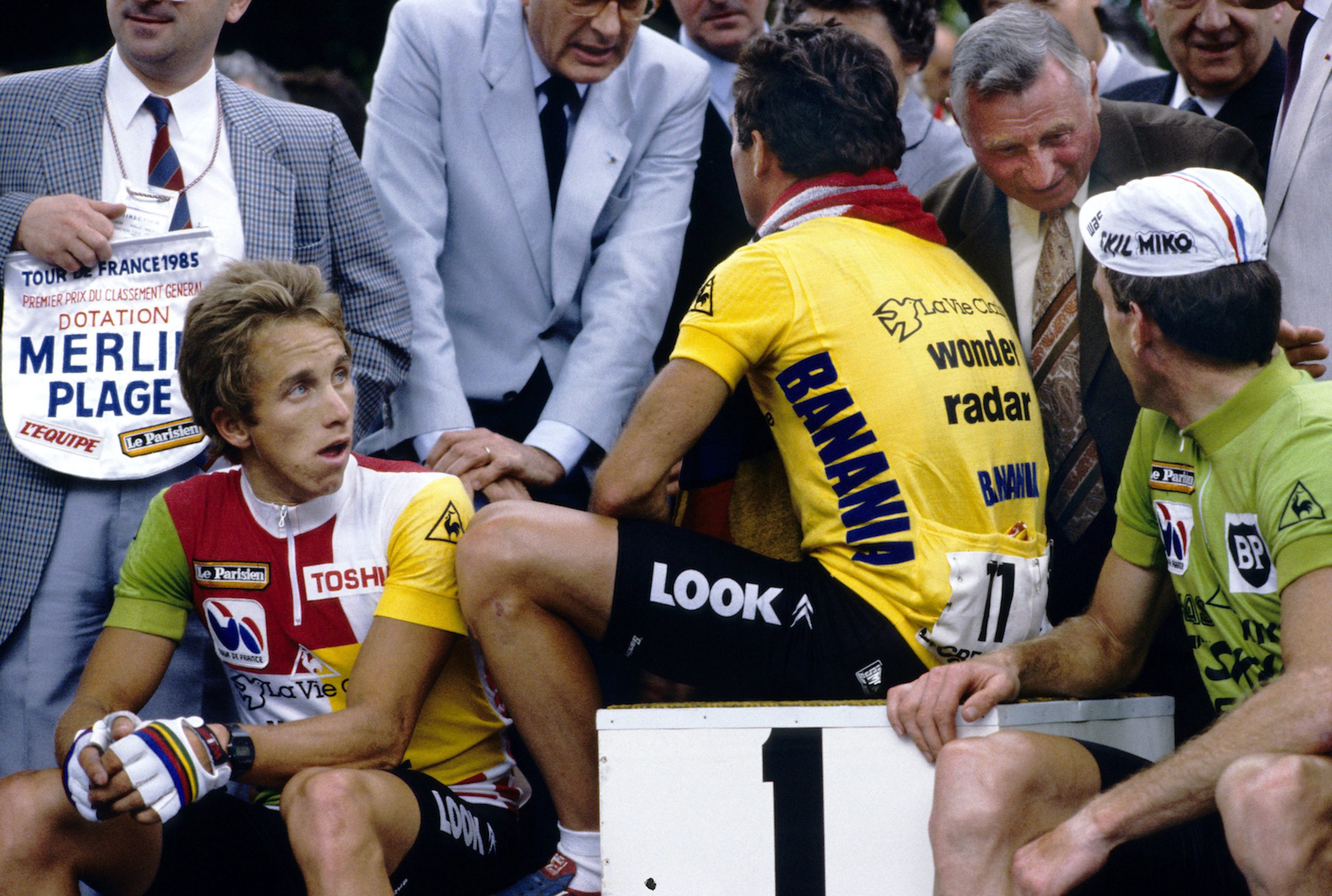
The 1980s roll of honour reads like the decade itself. Bernard Hinault won back-to-back editions in 1981 and 1982. Then Greg LeMond took over, winning the first two patchwork editions in 1985 and 1986 — right through the heart of the La Vie Claire civil war, when he and Hinault were trading attacks and mind games on the same team bus. Look at the 1985 podium photo: LeMond in the patchwork, Hinault in yellow, neither entirely happy with the arrangement.
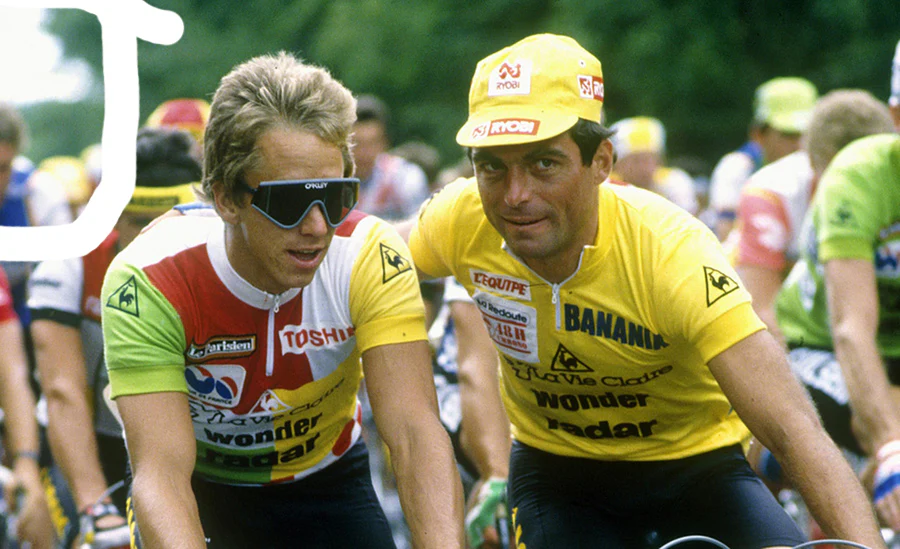
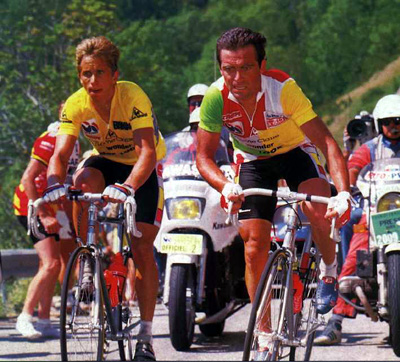
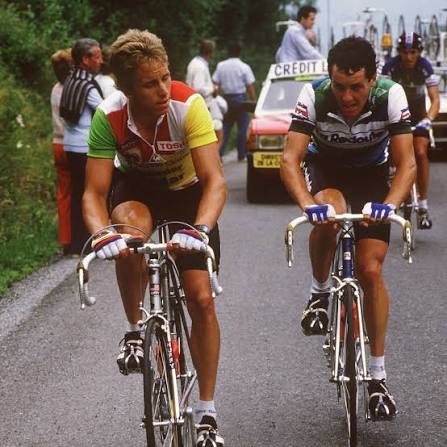
A year later the roles reversed: LeMond in yellow, Hinault in the patchwork, the two of them clear of the world on the road to Alpe d’Huez. The combination jersey kept ending up on the shoulders of whichever of them wasn’t leading the Tour — which is exactly what it was for. When the best rider in the race already has yellow, the patchwork finds the second-best all-rounder in the world.
The end of the road
The last man to wear it was the Dutch climber Steven Rooks, who won the final two editions in 1988 and 1989. Then Jean-Marie Leblanc took over as race director, set about streamlining the Tour, and the combination classification was quietly retired after 1989 — along with, eventually, its spiritual cousins at the Vuelta and elsewhere.
The official reasoning was tidiness: four jerseys tell four clean stories, and a fifth computed from the other three tells a complicated one. Fair enough. But something real was lost. Today’s Tour would have a combination battle for the ages — Pogačar has led three classifications at once in this very race, and the fight behind him between Vingegaard, Evenepoel and the young all-rounders is precisely what the patchwork was built to measure.
Moral of the story
The grupetto has a soft spot for the combination jersey, because it made the same argument we do: cycling is not one race, it’s several happening simultaneously, and the riders who show up in all of them deserve their own podium. Also, frankly, it looked fantastic. Bring back the quilt.