September’s sharpener
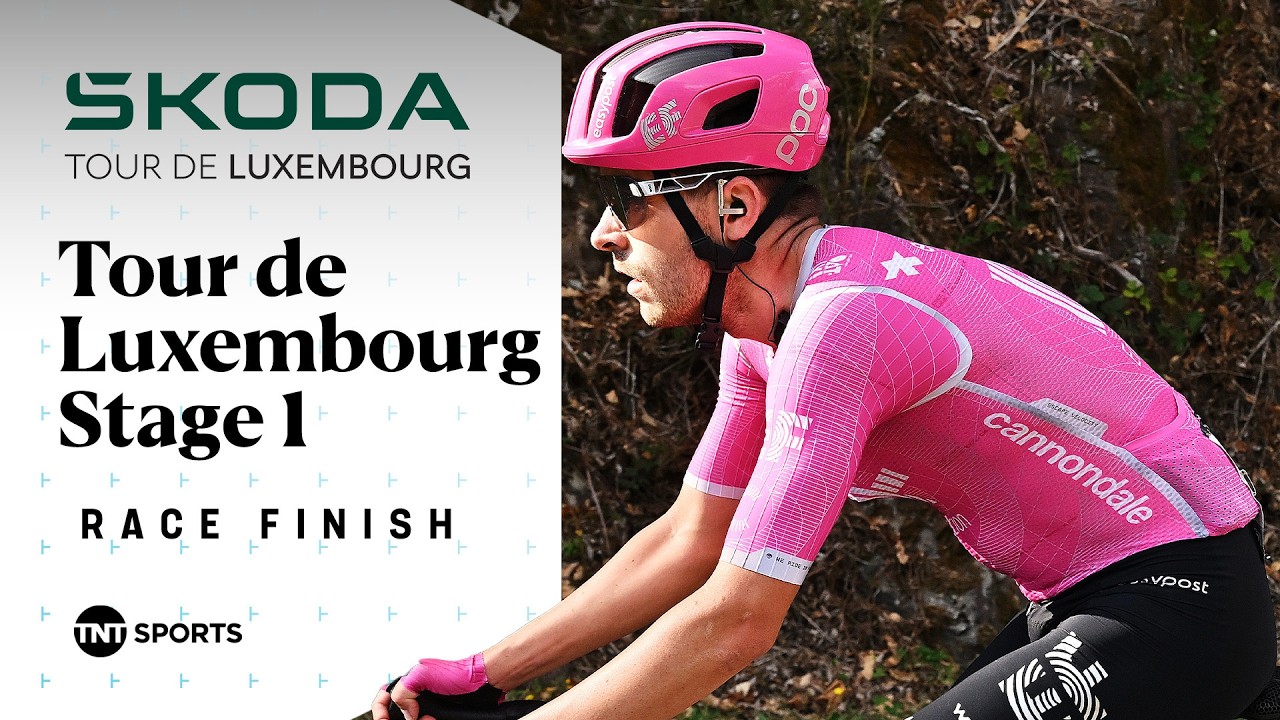
The Škoda Tour de Luxembourg is where September’s ambitions come to get race-sharp: five days of short, punchy climbing eleven days before the Worlds, on roads lumpy enough to matter and short enough to recover from. Stage 1 kept it in the capital — 157.5 km from the Knuedler to the Fëschmaart, looping through the hills around Luxembourg City — and a six-rider break led most of it, with Malte Hellerup hoovering both categorised climbs while the bunch measured its effort behind. A controlled day, right up until the man everyone had come to watch decided control was boring.
The eleven-kilometre rehearsal
Van der Poel attacked with 11 km to go, because when you’re using a stage race to tune for a World Championship, the tuning is the attack. Eike Behrens bridged across, the pair stretched their lead to 12 seconds, and for a few kilometres the race had its script: the strongest rider clear, the chase disorganised. Except this chase organised, and the catch came with four kilometres left — normally the moment a long-range raider’s day ends in anonymous mid-bunch. Andrea Bagioli read it that way and jumped inside the final kilometre. He had not accounted for the fact that Van der Poel treats being caught as a lap counter, not a verdict: the Dutchman countered at 500 metres and simply rode away from the sprint, with Pierre Gautherat and Marijn van den Berg best of the rest and Jasper Stuyven rounding out the top five.
The shape of a Worlds favourite
The subtext is the same as it was in Montréal on Sunday: everything in the last fortnight of September is about the 27th. Van der Poel skipped Canada, chose Luxembourg, and delivered the kind of performance that reframes the favourites conversation — attack long, get caught, win anyway, take the jersey. Against Del Toro’s uphill-sprint composure and Seixas’s teenage aggression, the rainbow race now has a third archetype in form: the man who breaks races open just to see what falls out. Four more Luxembourg stages to sharpen the blade, and a Tour de France that ended with him winning in Paris says the edge holds.
In the grupetto
A September stage race’s autobus is a strange congregation: Vuelta survivors spinning the legs, classics riders building toward Lombardy, neo-pros getting their first look at a WorldTour-adjacent field. The grupetto salutes the six-man break and Hellerup’s climb-collecting in particular — a jersey is a jersey — and Eike Behrens, who bridged to the best rider in the race, did his share of the work, and got the reward such bravery usually gets: caught with everyone else, four kilometres from the glory.
Moral of the story
Bagioli attacked when Van der Poel was caught, on the sound theory that even the strongest man needs to recover. The theory was fine. The sample was wrong. The grupetto’s moral: catching a great rider tells you where he is, not what he has left — and the only rider who knows that number is the one you just caught. One stage, one jersey, eleven days to Montréal. The Worlds field just got another reason to stare at the ceiling.