A stage for the break, and a morning for Norway
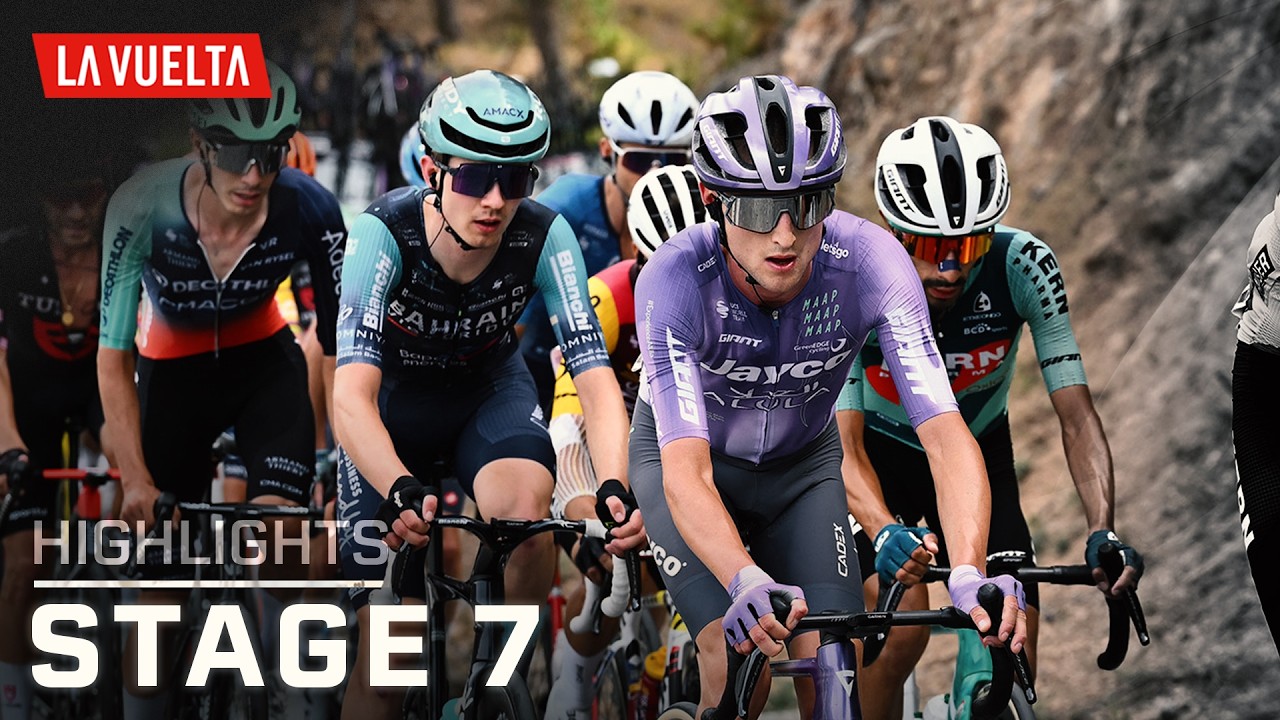
Stage 7 was the first summit finish in the Sistema Ibérico: 150 km from Vall d’Alba with the final 50 virtually all uphill, Fuente de Rubielos and San Rafael stacked straight into the 8 km climb to the Aramón Valdelinares ski station at 1,961 metres — a day of accumulated fatigue, built for a strong breakaway and a GC group content to watch each other. The news came before the start: King Harald V had died overnight. Uno-X Mobility, riding their first-ever Vuelta, pinned black armbands to their jerseys and went to work. What followed was the kind of afternoon that makes people who don’t understand cycling suddenly understand it.
Van Aert builds it, Uno-X steals it
Wout van Aert attacked from kilometre zero, because of course he did, and on the Puerto del Remolcador the day’s decisive move formed around him: Van Aert, Andreas Leknessund, Eddie Dunbar, Alexey Lutsenko and Tobias Halland Johannessen. A 23-rider chase group with Pello Bilbao, Valentin Paret-Peintre and Bruno Armirail in it dithered over who should work, the five got a minute, and it was clear from a long way out that the stage would be decided among them. Two of the five were on the same team. Leknessund went 7.5 km from the top, distanced Dunbar immediately and put Van Aert into difficulty; Johannessen did the textbook thing and sat on the Belgian’s wheel, refusing to chase his own team-mate, until the gap was 40 seconds and unassailable. Then, inside the final two kilometres, Johannessen dropped Van Aert too. Leknessund won by 34 seconds; Johannessen was second; Van Aert, who had made the whole day, was third at 47.
“I didn’t expect it to be this emotional”
It was Leknessund’s first Grand Tour stage win and Uno-X’s third in a row across the three Grand Tours this season, after the Giro and the Tour — from a team that didn’t exist at WorldTour level five years ago. “When Tobias caught up with us, it gave me tremendous confidence,” he said of the moment Johannessen bridged to the break. And of the day itself: “It’s really hard to put into words. I didn’t expect it to be this emotional. It was an emotional day for the team and for all of Norway.” Johannessen was more matter-of-fact about the tactics — “this is exactly what you hope for when you’re in the breakaway with just two of you” — which is the kind of thing you can afford to say when it works.
Behind: Gall attacks, Pogačar answers, Carapaz cracks
Four minutes down the mountain, the GC group was supposed to be neutral and wasn’t. Decathlon drove the climb, Felix Gall attacked, and Pogačar did what Pogačar does to attacks — went straight past it and rode away alone, finishing 4:23 behind Leknessund but six seconds up on Gall and clear of Mas, Roglič, Kuss and Onley. The real casualty was Richard Carapaz, who lost 1:22 and dropped from fourth to seventh. The classification after a week: Pogačar; Mas at 3:50; Roglič at 4:50; Gall at 5:01; Kuss at 6:05. A day after Mas had looked him in the eye on the Bartolo gravel, Pogačar took 16 seconds back without appearing to try. Tomorrow is a flat run to Xeraco for the sprinters. Then Aitana.
In the grupetto
Fifty kilometres of climbing to finish a stage is the autobus’s natural habitat, and it formed early and rode in together a long way down the mountain. The stage the grupetto will talk about, though, is the 23-man chase group — a who’s-who of climbers who spent an hour looking at each other while five riders up the road decided the day. Sometimes the strongest group in the race is the one nobody in it wants to lead.
Moral of the story
Van Aert did everything: attacked from the start, made the break, drove it, and finished third behind two riders who had each other. The grupetto’s moral: on a summit finish, one team-mate in the break is worth more than the best legs in it. Uno-X rode for a King and a country and got a one-two for their trouble. Norway had a hard day. The Vuelta gave it a good one.